Opening article
Accelerating engineering for the physical world
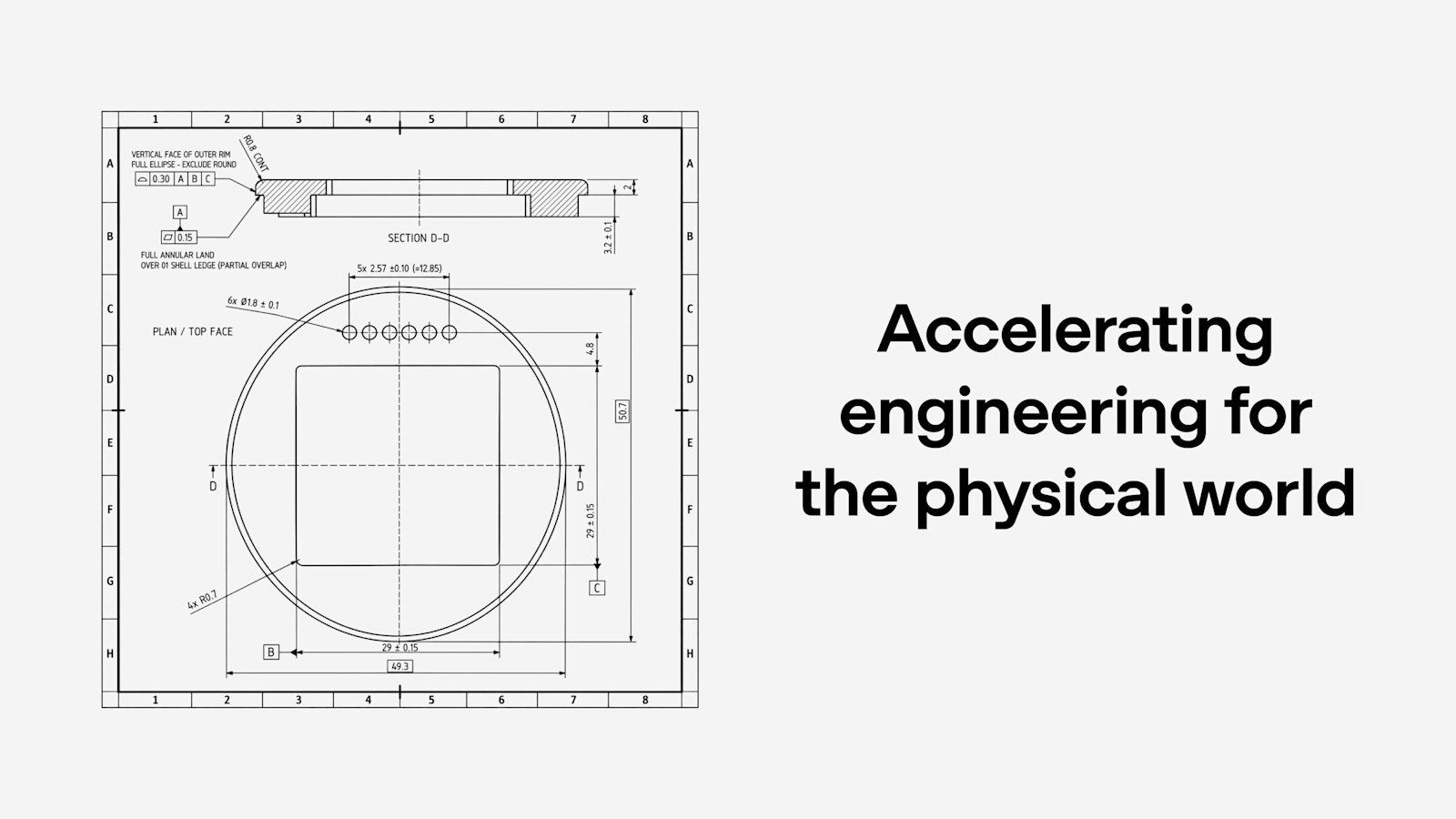
Discover how ChatGPT and Codex are helping engineers accelerate CAD, PCB design, simulation, and other workflows across the physical world. Today, we’re sharing advances in how OpenAI models help engineers design, simulate, and build physical products. These capabilities span mechanical and electrical engineering and end-to-end system design, and are already helping our internal teams test ideas and iterate faster. OpenAI’s hardware and infrastructure teams use Codex and ChatGPT to create and revise computer-aided design (CAD) models, prepare manufacturing drawings, set up simulations, and review designs.
Category
Products
Industry DomainThe Core Development
Today, we’re sharing advances in how OpenAI models help engineers design, simulate, and build physical products. These capabilities span mechanical and electrical engineering and end-to-end system design, and are already helping our internal teams test ideas and iterate faster.
Across these projects, engineers need to bring together mechanical designs, electronics, software, and manufacturing requirements using specialized tools. We’re teaching models to support that work, from preparing drawings and setting up simulations to coordinating changes across disciplines. Our goal is to give engineers more time to explore ideas and improve designs.
Over the past year, improved frontier model capabilities have helped our internal teams test new ideas and iterate faster, and we are seeing early evidence of these capabilities improving professional workflows in industry as well. We’re working with collaborators to understand where these capabilities can make the biggest difference and what needs to improve. If you’re an engineer, engineering firm, or software vendor involved in the design, simulation, manufacturing, or production of complex physical products, we’d love to work with you to shape this effort around the tools you use and the problems you need to solve.
Real-World Use Cases & Applications
If you are interested in working with us to shape the training and development of our frontier models by identifying high-value use cases, software tooling, or future opportunities in mechanical engineering, electrical engineering, electromechanical design, mechatronics, or a related field, please fill out this form and we'll be in touch.
Deployment & Availability
We’re working with a small group of industry collaborators to test these capabilities on real engineering problems. Their engineers review model outputs for accuracy and practical use, helping us understand which tasks models can support today and what needs to be improved for safe and reliable use.
Strategic Perspective & Ecosystem Impact
We tested Astra’s state-of-the-art performance in multimodal and computer use workflows by seeing if we can create a device without any direct human edits. To do this, we used GPT‑6 to define the functional requirements and design the enclosure, printed circuit board (PCB), and software integrations needed to create a device users can use to talk to Codex.
Aesthetics and design: Astra developed the look of the device, drawing on our recent Work Louder (opens in a new window) collaboration and references from games and toys.
Mechanical design: Astra designed the enclosure (opens in a new window) and the internal structures that hold the components in place.
Why it matters
Discover how ChatGPT and Codex are helping engineers accelerate CAD, PCB design, simulation, and other workflows across the physical world Reported by OpenAI on November 3, 2026.
Topic dossiers OpenAI